Maggie O’Farrell turns the “write what you know” cliché on its head in The Guardian. She is right, I think.
Of her peculiar fascination with dysfunctional families, she explains, "I'm very close to both of my sisters, but I think a lot of writing is talking about something you don't know. I've always been intrigued by people who don't get on with their siblings; the idea that you wouldn't, and why that would be, fascinates me. Often, I think the impetus to write is to explore something you don't fully comprehend."
Wednesday, September 27, 2006

New Sincerity
Ada Calhoun reflects on McSweeneys, and the men at its centre in particular. I’ve enjoyed a lot of the sestinas posted there, but I found myself recognising the essential truth of what Ada is saying. I can’t say anything about the individuals portrayed of course (I don’t know them personally, and she clearly has personal reasons to represent them in a negative light), but I never thought that the brief literary New Sincerity movement represented anything but a new form of insincerity. The article is 18 months old, but I don't think much has changed. Here’s an excerpt, but her whole article is worth reading, if rather gossipy.
Dave Eggers represented the much-headlined New Sincerity. Unfortunately, in the '90s I was about as Old Sincere a girl as you could find. I could not lie, and I could not make it through a Hal Hartley film without weeping at its human truth, although I hated that about myself. McSweeney's writers hated their own feelings too, I was sure, but I couldn't do anything to hide mine, whereas they somehow were able to transmute theirs into jaunty little titter-worthy pieces with titles like "An Open Letter to Little Children Who Play in the Alley and Like to Throw Stuff At My Car."
My friend describes their style as "Inside-jokey, Ivy-League-y, casually banter-y, but referencing every writer of the past three hundred years." In order to participate, you have to have your eyebrow cocked 24 hours a day. Or, as another friend says, "It's like they built a cool treehouse in the backyard but required everyone to invent their own cutesy conceit before they'd allow them up the ladder." Only when you play their game in exactly the right way will you earn love, or whatever passes for love in that sphere….
…For years, there's been all that talk about sincerity being the new irony and irony being the new sincerity and I don't pretend to have any new insight into which is which this week. All I know is those guys haven't had anything new to say for some time.
The fact is, I should have found someone else to hang out with that summer and all those '90s summers after that, when I instead wasted my time on representatives of the neo-sincere who disdained me: Davide, the 29-year-old virgin so religious he thought he could make it rain by praying; John, the realist painter who introduced me to the Replacements and told me he didn't love me while we sat a foot apart on a dock in the middle of the night. In most cases, I took it well – which is, of course, what neo-sincerity required.
With Valentine's Day upon us, my first as a married grown-up, I've been able to look back on all my wince-worthy crushes with a little distance. It's the ultimate in Old Sincerity: wistful reflection (cue appropriate Cure song). Only I don't feel so wistful about that particular phase – just humbly grateful that I wound up with someone besides those guys I so unproductively swooned over back then. Being with someone who gets worked up about things besides obscure poetry meters and taxidermy is really kind of great. So, An Open Letter to All Those Neo-Sincere Men I Threw Myself At: Sorry, my mistake.
Dave Eggers represented the much-headlined New Sincerity. Unfortunately, in the '90s I was about as Old Sincere a girl as you could find. I could not lie, and I could not make it through a Hal Hartley film without weeping at its human truth, although I hated that about myself. McSweeney's writers hated their own feelings too, I was sure, but I couldn't do anything to hide mine, whereas they somehow were able to transmute theirs into jaunty little titter-worthy pieces with titles like "An Open Letter to Little Children Who Play in the Alley and Like to Throw Stuff At My Car."
My friend describes their style as "Inside-jokey, Ivy-League-y, casually banter-y, but referencing every writer of the past three hundred years." In order to participate, you have to have your eyebrow cocked 24 hours a day. Or, as another friend says, "It's like they built a cool treehouse in the backyard but required everyone to invent their own cutesy conceit before they'd allow them up the ladder." Only when you play their game in exactly the right way will you earn love, or whatever passes for love in that sphere….
…For years, there's been all that talk about sincerity being the new irony and irony being the new sincerity and I don't pretend to have any new insight into which is which this week. All I know is those guys haven't had anything new to say for some time.
The fact is, I should have found someone else to hang out with that summer and all those '90s summers after that, when I instead wasted my time on representatives of the neo-sincere who disdained me: Davide, the 29-year-old virgin so religious he thought he could make it rain by praying; John, the realist painter who introduced me to the Replacements and told me he didn't love me while we sat a foot apart on a dock in the middle of the night. In most cases, I took it well – which is, of course, what neo-sincerity required.
With Valentine's Day upon us, my first as a married grown-up, I've been able to look back on all my wince-worthy crushes with a little distance. It's the ultimate in Old Sincerity: wistful reflection (cue appropriate Cure song). Only I don't feel so wistful about that particular phase – just humbly grateful that I wound up with someone besides those guys I so unproductively swooned over back then. Being with someone who gets worked up about things besides obscure poetry meters and taxidermy is really kind of great. So, An Open Letter to All Those Neo-Sincere Men I Threw Myself At: Sorry, my mistake.
Monday, September 25, 2006
Jackie Kay
 Last night I went to the Shore Poets and had a great evening. The music was by The Linties, a vocal three-piece who sang both funny songs and more serious ones. I confess I often dread the music slot at the Shore Poets, but last night’s was very good.
Mandy Maxwell was the first poet on. She is from Glasgow and her poems tend to reflect the city – its dialect, sense of humour, and music. They were humorous and sad in turn.
Christine de Luca was second on the bill. Most of her poems are in Shetlandic dialect, a curious hybrid of English, Norwegian, and home-grown language. It sounds fantastic. She read some of the poems in English first, and with others, she gave definitions of difficult words before reading. She also read some of her translations into Shetlandic from Welsh and Latvian. A real experience to hear this, and an excellent and charismatic performance.
Finally, on came Jackie Kay. It’s hard for me to know how well known Jackie Kay is outside of the UK. In Scotland she is a extremely well known writer with several award winning novels and poetry collections. She is the official virtual poet-in-residence for this years UK National Poetry Day (October 5) and is keeping a blog for that, which is well worth looking at.
Her performance was ebullient, one of the most engaging I’d ever seen. She connected immediately with her audience by sheer force of personality. She got lots of laughs, but her poetry’s humour is often dark. She combines natural speech rhythms, narrative and wit with real depth and poignancy. And her anecdotes in between poems were hilarious, a real lesson for anyone thinking of performing.
A few choice examples – you need to know that Jackie is Scottish and black (black Nigerian father, white Scottish mother):
Jackie and her mother are in a clothes shop and Jackie tries on a dress.
Mother: That colour really suits you.
Jackie: Great.
Woman standing nearby: I’d just like to say I agree. That colour really does suit you.
Jackie: Thanks.
Woman: Can I ask? Where do you come from?
Jackie: Eh… I’m from Glasgow.
Woman: Oh… that’s interesting. (pause for thought…and then turns to mother) You know, I once knew someone from the Dominican Republic!
*
Jackie and her mum are in a shop and a woman falls into conversation with them.
Woman: Excuse me, but (I hope you don’t mind me asking) did you say you are mother and daughter?
Mother: Yes, that’s right
Woman: Oh… you know, your daughter looks just so… tanned.
Mother: Ah well…
Woman: I hope you don’t mind me asking, but is she that colour every day?
*
Jackie: I woke up one morning with a terrible hangover, and I thought, as a hangover cure, that I’d write an erotic poem about a donkey… And it worked!
*
If any of you get the chance to see Jackie Kay perform her poems, don’t miss it!
And you can hear Jackie read here, a recording from 2001. Pride is especially good, I think, and English Cousin Comes to Scotland is a hoot.
Sunday, September 24, 2006
Perfection
At an Edinburgh Book Festival event, the writer Chris Dolan told a story about fellow Scottish writer Janice Galloway. She had completed her astonishing first novel, The Trick is to Keep Breathing, and it had been well reviewed. One major American newspaper said of it that every word and phrase was “nothing short of perfect”, or something to that effect. Of course, Janice Galloway would have been pleased at such a review, but when she started writing her next novel, she couldn’t get going. The words wouldn’t come. Nothing she wrote seemed “nothing short of perfect”. For two years she struggled to get anything on paper that she was willing to keep.
In my more lucid moments, I realise that the prize-winning poem is just another poem, one of my better ones, but nonetheless just a poem that got lucky. But it’s interesting how what other people say about a poem can affect how I look on it, and on the rest of my work. I wonder if Janice Galloway still believes, several years on, that The Trick is the best thing she’s ever done. I suspect not. I hope not, irrespective of whether it is or not.
Friday, September 22, 2006
Tideland
There was a poem here, and thanks for the comments on it. But I've replaced it with with a movie review:
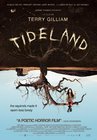 Name of Movie: Tideland
Director: Terry Gilliam
Year: 2006
Cast: Jodelle Ferland, Jeff Bridges, and others
Country: USA
Tideland, is the strange tale, adapted from Mitch Cullin’s novel of the same name, about a ten-year-old girl, Jeliza-Rose. Both her parents are heroin addicts and when her mother dies from an overdose, her father, Noah, takes her to an old family house in the middle of nowhere which has fallen into ruin over the years. The only neighbours are a taxidermist, Dell, and her brain-damaged brother, Dickens. When Noah also dies, Jeliza-Rose is left with only her four “friends”, decapitated doll-heads she attaches to her fingers and converses with – the only friends she’s ever had.
Jeliza-Rose’s strange upbringing makes her a highly unusual character. She shows no emotion over the death of either parent and indeed, doesn’t appear to understand what death is. When she encounters the weird Dell and Dickens, they are no odder than anything she’s previously encountered in her life. Her father’s corpse decays, smothered in flies, in the house’s rocking chair. Dell embalms it and walks about the fields in a sinister bee-keeping attire, and is prone to terrifying mood-swings. Dickens’s view on the world is that of a child in a man’s body, but his hormones are adult, and his obvious attraction to Jeliza-Rose is, to say the least, disturbing.
Jodelle Ferland was superb in the lead role as Jeliza-Rose. In some ways, due to the difficulties she’d experienced in her life, she was old beyond her years, but in most others completely innocent. It’s this sense of vulnerability that’s always going to make an audience care, and she was a wonderfully engaging and imaginative character.
As for the other characters, they were well performed, but behind all their grotesque oddness, there was something superficial about them. Sometimes weirdness can be used as a substitute for real depth. It’s like a disguise. You feel there’s something interesting about the character, you become fascinated by their strangeness, but there’s nothing to them except that surface strangeness. Jeliza-Rose’s father, Noah, was unconvincing as a heroin addict. He seemed far too attentive to his daughter, not selfish enough.
That said, the movie is fascinating, the photography is terrific, the imagery memorable, the ending provocatively double-edged. Terry Gilliam presents a portrait of a girl which is moving, engaging, and tragic – without being in any sense morbid. He has a surreal imagination that's reminiscent of Fellini. It’s a cut above most films you’ll see this year.
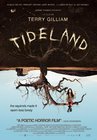 Name of Movie: Tideland
Director: Terry Gilliam
Year: 2006
Cast: Jodelle Ferland, Jeff Bridges, and others
Country: USA
Tideland, is the strange tale, adapted from Mitch Cullin’s novel of the same name, about a ten-year-old girl, Jeliza-Rose. Both her parents are heroin addicts and when her mother dies from an overdose, her father, Noah, takes her to an old family house in the middle of nowhere which has fallen into ruin over the years. The only neighbours are a taxidermist, Dell, and her brain-damaged brother, Dickens. When Noah also dies, Jeliza-Rose is left with only her four “friends”, decapitated doll-heads she attaches to her fingers and converses with – the only friends she’s ever had.
Jeliza-Rose’s strange upbringing makes her a highly unusual character. She shows no emotion over the death of either parent and indeed, doesn’t appear to understand what death is. When she encounters the weird Dell and Dickens, they are no odder than anything she’s previously encountered in her life. Her father’s corpse decays, smothered in flies, in the house’s rocking chair. Dell embalms it and walks about the fields in a sinister bee-keeping attire, and is prone to terrifying mood-swings. Dickens’s view on the world is that of a child in a man’s body, but his hormones are adult, and his obvious attraction to Jeliza-Rose is, to say the least, disturbing.
Jodelle Ferland was superb in the lead role as Jeliza-Rose. In some ways, due to the difficulties she’d experienced in her life, she was old beyond her years, but in most others completely innocent. It’s this sense of vulnerability that’s always going to make an audience care, and she was a wonderfully engaging and imaginative character.
As for the other characters, they were well performed, but behind all their grotesque oddness, there was something superficial about them. Sometimes weirdness can be used as a substitute for real depth. It’s like a disguise. You feel there’s something interesting about the character, you become fascinated by their strangeness, but there’s nothing to them except that surface strangeness. Jeliza-Rose’s father, Noah, was unconvincing as a heroin addict. He seemed far too attentive to his daughter, not selfish enough.
That said, the movie is fascinating, the photography is terrific, the imagery memorable, the ending provocatively double-edged. Terry Gilliam presents a portrait of a girl which is moving, engaging, and tragic – without being in any sense morbid. He has a surreal imagination that's reminiscent of Fellini. It’s a cut above most films you’ll see this year.
Thursday, September 21, 2006
Cut'n'Paste
I found these strange instructions on a website and thought I’d follow them. But who knows why?
1. Take first five novels from your bookshelf.
2. Book 1 — first sentence
3. Book 2 — last sentence on page 50
4. Book 3 — second sentence on page 100
5. Book 4 — next to the last sentence on page 150
6. Book 5 — final sentence of the book
7. Make the five sentences into a paragraph.
8. Feel free to “cheat” to make it a better paragraph.
9. Name your sources.
10.Post to your blog.
Here’s my paragraph made from the five required sentences (I didn't 'cheat', as will be obvious):
The weather person shapes a bulletin around this week in nineteen fifty-one; then depth of snow off-piste in Val d’Isère, the unusually heavy rain for the time of year in northern Mexico. The cows were patient, immune to the calls for quick revenge, until the boy lies deep beneath the toppled haystack, smothering. The wife has gone home, mad, with the baby on one arm. The last far thunder-sack ripped and spilled its grumble. See the face of a man with a muddy tongue.
And here are the sources:
Ros Barber – How Things are on Thursday (Anvil 2004)
Julie Carter – Pseudophakia (Lulu 2006)
Philip Levine – New Selected Poems (A. Knopf, 1991)
Edwin Morgan – New Selected Poems (Carcanet 2000)
Rik Roots – The Rik Verse (Lulu 2006)
I suppose the paragraph could just about make sense, given a context.
1. Take first five novels from your bookshelf.
2. Book 1 — first sentence
3. Book 2 — last sentence on page 50
4. Book 3 — second sentence on page 100
5. Book 4 — next to the last sentence on page 150
6. Book 5 — final sentence of the book
7. Make the five sentences into a paragraph.
8. Feel free to “cheat” to make it a better paragraph.
9. Name your sources.
10.Post to your blog.
Here’s my paragraph made from the five required sentences (I didn't 'cheat', as will be obvious):
The weather person shapes a bulletin around this week in nineteen fifty-one; then depth of snow off-piste in Val d’Isère, the unusually heavy rain for the time of year in northern Mexico. The cows were patient, immune to the calls for quick revenge, until the boy lies deep beneath the toppled haystack, smothering. The wife has gone home, mad, with the baby on one arm. The last far thunder-sack ripped and spilled its grumble. See the face of a man with a muddy tongue.
And here are the sources:
Ros Barber – How Things are on Thursday (Anvil 2004)
Julie Carter – Pseudophakia (Lulu 2006)
Philip Levine – New Selected Poems (A. Knopf, 1991)
Edwin Morgan – New Selected Poems (Carcanet 2000)
Rik Roots – The Rik Verse (Lulu 2006)
I suppose the paragraph could just about make sense, given a context.
Wednesday, September 20, 2006
Poems and Pears
Those of you who write poems might be interested in taking part in Frank Wilson’s Inquiry into poems and pears and origins.
Sandinista!

Artist: The Clash
Album: Sandinista!
Year: 1980
Record Label: CBS (now Sony)
Read any official history of The Clash and it will tell you that the eponymous debut, The Clash, is the landmark, Give 'Em Enough Rope the adequate follow-up, London Calling the classic, and the final album Combat Rock a flawed work with some fine individual songs that don’t gel as a whole.
The critics were bemused and ultimately dismayed. Some of the group’s fans who had followed them since the early punk days accused them of “selling out”, although selling to what wasn’t clear. Certainly not to commercialism, as Sandinista! was anything but commercial. It features a bewildering range of styles, and none of them fitted with the zeitgeist of the day, musically or politically.
A few tracks, such as Police on my Back and Somebody Got Murdered hearken back to the old punk days, but they are much in the minority. There’s a heavy dub reggae influence, and dub reggae guru, Mikey Dread, features on several tracks. There’s dance (The Magnificent Seven, The Call Up), pop irony (Hitsville
The lyrics are often political. Mick Jones’s lyrics often verge into over-earnest parody, but Joe Strummer’s hold up better – “in a war-torn swamp, stop any mercenary, and check the British bullets in his armoury”, that’s at a time when subjects like the arms trade weren’t a feature of pop songs and were barely talked about in polite society.
I think it’s about time to re-evaluate Sandinista! Not every track is a classic, but it’s a bold and important album that should be better appreciated. I saw the Clash soon after it was released, and they kicked off their 150-minute set with Broadway, an obscure track from side 4 that I’d hardly noticed on the album. I realised then what a great song it was, and throughout the 36 tracks, understated quality turns up again and again with every listen.
Sunday, September 17, 2006
Simon Armitage - Out of the Blue
Simon Armitage is one of the few UK poets who have managed to break through to new audiences beyond the usual poetry audience (i.e. other poets). Back in the early 1990s he read poems weekly on the Mark Radcliffe show on Radio 1 between indie records, and on the strength of that, I got interested in his poetry. His first collection Zoom! was a real achievement combining wit, northern vernacular, and clever use of rhythm and form, to create poetry that was neither inaccessible nor dumb. The follow-up, Kid, had its moments, but wasn’t as strong as its predecessor. However, Book of Matches got him on track again. Since then, he’s been inconsistent, but at his best he can write as well as anyone. To be honest I prefer that inconsistent brilliance to the consistently average output that many poets serve up.
When I heard he’d been commissioned to write a long poem commemorating the 5th anniversary of the September 11th disaster, I wondered whether he had been set up to fail. You might just get away with a short lyric poem, but to sustain tension and interest over 17 pages on such a subject seemed almost impossible. We know the images so well, and to match their impact was never going to be easy.
You can judge how well he succeeded here, or by clicking the “Out of the Blue” link at Simon Armitage’s site.
I think he does as well as he could in some ways. The poem is dramatic, with clever injections of pace and affecting imagery. It was read to the background of a short Channel 5 film, and its punchy sound and personal style worked powerfully in that context. It conveys the shock, horror and emotional drama of the day, centring on one character, an Englishman trapped in one of the buildings.
My criticism would be that it doesn’t go beyond the (effective) portrayal of shock, horror, and emotion. Cheap political points would have miscued, but I thought that, over 17 pages, the poem might have dug a little deeper, tried to say something more about the social impact on the USA and the wider world than simply “things have changed and nothing is safe any more”, which is as far as it goes.
Having said that, I think it’s still a decent attempt, with some good poetry. In part 4, he lists articles in his protagonist’s office, and towards the end, these resurface, the lines unchanged, after the building has crashed to the ground, a powerful emotional moment:
Watches are found still keeping time -
the escapement sound, the pulse still alive
but others have locked at ten-twenty-eight.
Others like mine.
And here is a rock from Brighton beach,
here is a beer-mat, here is the leaf
of an oak, pressed and dried, papery thin.
Here is a Liquorice Allsorts tin.
The flag of St George.
A cricket ball.
Here is calendar, counting the days.
Here is a photograph snug in its frame,
this is my wife on our wedding day,
here is a twist of her English hair.
No ashes as such, but cinders and grains
are duly returned,
sieved and spooned and handed back
in a cherry-wood urn in a velvet bag.
All lost.
All lost in the dust.
Lost in the fall and the crush and the dark.
Now all coming back.
Definitely worth a read.
When I heard he’d been commissioned to write a long poem commemorating the 5th anniversary of the September 11th disaster, I wondered whether he had been set up to fail. You might just get away with a short lyric poem, but to sustain tension and interest over 17 pages on such a subject seemed almost impossible. We know the images so well, and to match their impact was never going to be easy.
You can judge how well he succeeded here, or by clicking the “Out of the Blue” link at Simon Armitage’s site.
I think he does as well as he could in some ways. The poem is dramatic, with clever injections of pace and affecting imagery. It was read to the background of a short Channel 5 film, and its punchy sound and personal style worked powerfully in that context. It conveys the shock, horror and emotional drama of the day, centring on one character, an Englishman trapped in one of the buildings.
My criticism would be that it doesn’t go beyond the (effective) portrayal of shock, horror, and emotion. Cheap political points would have miscued, but I thought that, over 17 pages, the poem might have dug a little deeper, tried to say something more about the social impact on the USA and the wider world than simply “things have changed and nothing is safe any more”, which is as far as it goes.
Having said that, I think it’s still a decent attempt, with some good poetry. In part 4, he lists articles in his protagonist’s office, and towards the end, these resurface, the lines unchanged, after the building has crashed to the ground, a powerful emotional moment:
Watches are found still keeping time -
the escapement sound, the pulse still alive
but others have locked at ten-twenty-eight.
Others like mine.
And here is a rock from Brighton beach,
here is a beer-mat, here is the leaf
of an oak, pressed and dried, papery thin.
Here is a Liquorice Allsorts tin.
The flag of St George.
A cricket ball.
Here is calendar, counting the days.
Here is a photograph snug in its frame,
this is my wife on our wedding day,
here is a twist of her English hair.
No ashes as such, but cinders and grains
are duly returned,
sieved and spooned and handed back
in a cherry-wood urn in a velvet bag.
All lost.
All lost in the dust.
Lost in the fall and the crush and the dark.
Now all coming back.
Definitely worth a read.
Tuesday, September 12, 2006
Legenda
I deleted the poem. Thanks for commenting. And here's a review about a bottle of wine.


Name: Legenda
Grape: Merlot
Year: 2004
Country:
Alcohol: 14.5 %
Price: £5.90
Obtained: a gift
The taste is rich and complex. It should have been saved for a steak meal, with guests round a table. But I can assure you it goes down a treat when sitting listlessly in front of the TV on an evening when there’s nothing worth watching. At 14.5 %, it might even make television seem bearable.
Sunday, September 10, 2006
Friday, September 08, 2006
Teachers
My poem, Teachers, is now on display in the qarrtsiluni webzine, part of qarrtsiluni's 'education' theme.
Monday, September 04, 2006
Most Poetry Ignores Most People?
I was thumbing through an old issue of Thumbscrew, a UK poetry magazine, from six years ago, and an article from Andy Croft caught my eye. He begins:
"Most people," as Adrian Mitchell once famously put it, "ignore most poetry because most poetry ignores most people". This is of course regrettable, but at least it means that "most people" don't realise the contempt with which they are regarded by so many poets. Contemporary British poetry is not so much a game which everyone can play, as an élite sport played by professionals to which the rest of us are invited as spectators.
It is a stately-home nature-trail patrolled on every side by game-keepers. It is a night-club with more bouncers than dancers. It is a world in which, according to Jane Holland in Poetry Review, "there are too many people out there writing poetry" - an opinion which subsequent correspondence in the magazine suggests is "the private view of most serious poets" and editors "who have to wade through oceans of substandard verbiage on a regular basis to find anything worth publishing".
I can see why editors might feel that way, although I suspect they get some of that "substandard verbiage" from people who ought to know better, from frequently published poets and indeed, the "professionals".
I suppose the subtext of the attitude is that the professionals would much rather people stopped writing and instead read what they (the professionals) are writing, but people won't do so unless they like what they are offered to read.
Although there is a lot of interesting poetry around, you often have to know what you are looking for to find it. I find a lot of poems I read in magazines, even well-respected magazines, astonishingly tedious. Maybe editors have to start publishing fewer poems. Less could be more in this case, a higher quality product overall. If you want people to read poetry, give them something worth reading. That should also improve the overall standard of submissions, as readers of poetry obviously make better writers than non-readers.
"Most people," as Adrian Mitchell once famously put it, "ignore most poetry because most poetry ignores most people". This is of course regrettable, but at least it means that "most people" don't realise the contempt with which they are regarded by so many poets. Contemporary British poetry is not so much a game which everyone can play, as an élite sport played by professionals to which the rest of us are invited as spectators.
It is a stately-home nature-trail patrolled on every side by game-keepers. It is a night-club with more bouncers than dancers. It is a world in which, according to Jane Holland in Poetry Review, "there are too many people out there writing poetry" - an opinion which subsequent correspondence in the magazine suggests is "the private view of most serious poets" and editors "who have to wade through oceans of substandard verbiage on a regular basis to find anything worth publishing".
I can see why editors might feel that way, although I suspect they get some of that "substandard verbiage" from people who ought to know better, from frequently published poets and indeed, the "professionals".
I suppose the subtext of the attitude is that the professionals would much rather people stopped writing and instead read what they (the professionals) are writing, but people won't do so unless they like what they are offered to read.
Although there is a lot of interesting poetry around, you often have to know what you are looking for to find it. I find a lot of poems I read in magazines, even well-respected magazines, astonishingly tedious. Maybe editors have to start publishing fewer poems. Less could be more in this case, a higher quality product overall. If you want people to read poetry, give them something worth reading. That should also improve the overall standard of submissions, as readers of poetry obviously make better writers than non-readers.
Saturday, September 02, 2006
Short Story Competition
If you’re a writer, you might be interested in the HappenStance Short Story Competition. The prizes (£100 for the winner, and a few other awards) won’t help you give up your day job, but you’ll have the kudos, a warm fuzzy feeling, and your work will turn up in what promises to be an excellent short story chapbook.
Judge is James Robertson, who is on the Booker Prize longlist this year, for his novel The Testament of Gideon Mack. Closing date for entries is January 25th 2007. Rules and entry fees at the link.
Judge is James Robertson, who is on the Booker Prize longlist this year, for his novel The Testament of Gideon Mack. Closing date for entries is January 25th 2007. Rules and entry fees at the link.
Friday, September 01, 2006
The Book tag
It was Cailleach, who tagged me, if you’re looking for someone to blame for this entry:
1.One book that changed your life?
Letters and Papers from Prison by Dietrich Bonhoeffer, which made me look at faith in an entirely different light. Teach Yourself Writing Poetry by Matthew Sweeney and John Hartley Williams, which got me writing poetry and made me think about it in a different way to how I'd thought before.
2.One book you've read more than once?
The End of the Affair by Graham Greene. There have been more, and several poetry books.
3.One book you'd want on a desert island?
A really big anthology of poetry.
4.One book that made you laugh?
The Colour of Black and White by Liz Lochhead
5.One book that made you cry?
I can’t remember ever crying at a book, although many books have made me feel sad.
6.One book that you wish you had written?
Collected Poems by Edwin Morgan, although I’m more than happy that Edwin Morgan wrote it.
7.One book you wish had never been written?
The Da Vinci Code by Dan Brown – I hate bad writing that becomes really popular, so that book really is just representative of a very wide phenomenon.
8.One book you are currently reading?
The Full Indian Rope Trick by Colette Bryce, The Asylum Dance by John Burnside, and Selected Poems by Czeslaw Milosz. That’s three, I suppose, but that’s how I read.
9.One book you have been meaning to read?
Collected Poems by Lee Harwood
10.Five people I am tagging:
No one, but by all means have a shot, anyone who wants to.
1.One book that changed your life?
Letters and Papers from Prison by Dietrich Bonhoeffer, which made me look at faith in an entirely different light. Teach Yourself Writing Poetry by Matthew Sweeney and John Hartley Williams, which got me writing poetry and made me think about it in a different way to how I'd thought before.
2.One book you've read more than once?
The End of the Affair by Graham Greene. There have been more, and several poetry books.
3.One book you'd want on a desert island?
A really big anthology of poetry.
4.One book that made you laugh?
The Colour of Black and White by Liz Lochhead
5.One book that made you cry?
I can’t remember ever crying at a book, although many books have made me feel sad.
6.One book that you wish you had written?
Collected Poems by Edwin Morgan, although I’m more than happy that Edwin Morgan wrote it.
7.One book you wish had never been written?
The Da Vinci Code by Dan Brown – I hate bad writing that becomes really popular, so that book really is just representative of a very wide phenomenon.
8.One book you are currently reading?
The Full Indian Rope Trick by Colette Bryce, The Asylum Dance by John Burnside, and Selected Poems by Czeslaw Milosz. That’s three, I suppose, but that’s how I read.
9.One book you have been meaning to read?
Collected Poems by Lee Harwood
10.Five people I am tagging:
No one, but by all means have a shot, anyone who wants to.
Tuesday, August 29, 2006
Billy Collins at the Edinbugh Book Festival

Last night at the Billy Collins poetry show
I took the last seat in the tent
beside a middle-aged American couple.
The husband turned to his wife and said,
“I wonder if anyone here will know
who you are.” The wife was silent.
And I thought this was exactly
the kind of thing that often happens
in a Billy Collins poem.
As I began to write it in my head
I sneaked a look, and felt disappointed
that I didn’t know who the wife was,
the shape of her face like a lizard
blown up to A3 by a photocopier
and pasted to every wall in the city.
Do you know who I am? it might shriek
to innocent passers by who know nothing
of poetry and probably don’t care.
And when Billy Collins takes the stage
and suggests that poetry might end
only when poets have finally compared
everything to everything else,
and at this, and everything else,
the crowd and I crease in laughter,
I realise I have never known him
beyond thumbnails on dustjackets
and a casual scratch of words in books.
Afterwards at the signing desk, he smiles,
asks pertinent questions, shakes my hand,
as if nothing could be more important.
He is like that incomparable something
which might remind you of something
hours after all comparisons have been made.
Monday, August 28, 2006
Paul Muldoon
Paul Muldoon performed at the Edinburgh Book festival on Saturday and was everything I expected – witty, warm and confident. He was good at delivering his poems, slow without being too slow, and able to speak clearly with just the right emphasis on each word. He gave the impression that every word mattered intimately, which should be the case in any poem.
He read mainly from his forthcoming collection, Horse Latitudes. I really enjoyed his previous book Moy Sand and Gravel, and this new one sounded as though it will be at least as strong. It’s hard to take in Muldoon poems after a single read, however well they are read. I kept wanting to ask him to stop and give me a minute to take in what I’d heard. He read the new poem on the front page of his website, for example, A Hummingbird, which used quotes from a post-divorce party (real or imagined quotes, I don’t know) and integrated them with the flight of a hummingbird through a forest.
He also read a 13-part Sonnet Sequence, (originally published in Botteghe Oscure) in its entirety, half at the beginning and half at the end of the reading. It’s so clever in its use of repetition and, although it’s dark in places, it’s also funny. Muldoon did comment that he saw “no reason why poetry shouldn’t be fun, whatever some people might think”. Who are these people?!
One interesting comment he made was that he already felt distant from his new book, even though it hadn’t yet been published. He’d written it and was already interested in the next book, and in the creative process by which it would come about, if it ever did. Once a poem was finished, he left it behind. It’s the writing of poems he loves.
He read mainly from his forthcoming collection, Horse Latitudes. I really enjoyed his previous book Moy Sand and Gravel, and this new one sounded as though it will be at least as strong. It’s hard to take in Muldoon poems after a single read, however well they are read. I kept wanting to ask him to stop and give me a minute to take in what I’d heard. He read the new poem on the front page of his website, for example, A Hummingbird, which used quotes from a post-divorce party (real or imagined quotes, I don’t know) and integrated them with the flight of a hummingbird through a forest.
He also read a 13-part Sonnet Sequence, (originally published in Botteghe Oscure) in its entirety, half at the beginning and half at the end of the reading. It’s so clever in its use of repetition and, although it’s dark in places, it’s also funny. Muldoon did comment that he saw “no reason why poetry shouldn’t be fun, whatever some people might think”. Who are these people?!
One interesting comment he made was that he already felt distant from his new book, even though it hadn’t yet been published. He’d written it and was already interested in the next book, and in the creative process by which it would come about, if it ever did. Once a poem was finished, he left it behind. It’s the writing of poems he loves.
Saturday, August 26, 2006
The Writer's Life
I went to an Edinburgh Book Festival event yesterday evening about work. The panel featured four writers who talked about the tension between being a writer and holding a full-time job, having a family etc, and also about making the break to writing full-time.
The writers were Chris Dolan (novelist, TV scriptwriter, radio playwright, and several other things), Colette Bryce (poet), Linda Cracknell (short story writer), and Debbie Taylor (editor of Mslexia magazine and novelist). Their stories were interesting and varied.
Chris Dolan gave up his well-paid job one week and the next week discovered his wife was pregnant. That, in a sense, made it vital that he got paid writing work and also explains why he is involved in such a varied range of writing projects, but he sees himself as primarily a novelist – the novels don’t pay the bills though.
Debbie Taylor is about to give up editing Mslexia and become a full-time novelist. It’s what she wants to do and she doesn’t mind “being poor.” She was very positive about doing what gives you fulfilment, and at the same time was realistic and impressively articulate.
Colette Bryce said a similar thing – clearly poetry in itself doesn’t make much money, but fellowships, writing workshops, residencies etc help her to survive on a modest wage. She said to me afterwards that it was only after her first collection was published (on Picador) that commissions, fellowships etc really became an option for her. Before that, she just slogged away on a shoestring. She also felt that being able to say "I am a writer" was energising and confidence-building, rather than writing being a hobby or an activity slipped into the shadow hours.
Linda Cracknell chaired the meeting but spoke a little about her own experience. Basically being “a writer” doesn’t mean spending the majority of your time writing what you want. It’s all the other things – publicity, workshops, readings, paid commissions etc that help you to survive while you write what you want in between times.
So they all presented an unromantic view of the writer’s life. But none of them appeared to have any desire to return to their former day jobs.
The writers were Chris Dolan (novelist, TV scriptwriter, radio playwright, and several other things), Colette Bryce (poet), Linda Cracknell (short story writer), and Debbie Taylor (editor of Mslexia magazine and novelist). Their stories were interesting and varied.
Chris Dolan gave up his well-paid job one week and the next week discovered his wife was pregnant. That, in a sense, made it vital that he got paid writing work and also explains why he is involved in such a varied range of writing projects, but he sees himself as primarily a novelist – the novels don’t pay the bills though.
Debbie Taylor is about to give up editing Mslexia and become a full-time novelist. It’s what she wants to do and she doesn’t mind “being poor.” She was very positive about doing what gives you fulfilment, and at the same time was realistic and impressively articulate.
Colette Bryce said a similar thing – clearly poetry in itself doesn’t make much money, but fellowships, writing workshops, residencies etc help her to survive on a modest wage. She said to me afterwards that it was only after her first collection was published (on Picador) that commissions, fellowships etc really became an option for her. Before that, she just slogged away on a shoestring. She also felt that being able to say "I am a writer" was energising and confidence-building, rather than writing being a hobby or an activity slipped into the shadow hours.
Linda Cracknell chaired the meeting but spoke a little about her own experience. Basically being “a writer” doesn’t mean spending the majority of your time writing what you want. It’s all the other things – publicity, workshops, readings, paid commissions etc that help you to survive while you write what you want in between times.
So they all presented an unromantic view of the writer’s life. But none of them appeared to have any desire to return to their former day jobs.
Thursday, August 24, 2006
Baroque Convents
How would you describe a baroque convent?
Well you might lean towards physical description in painstaking detail. Or you might try a psychological approach contrasting spiritual and material values. Or you could go for shape, contour, colour etc...
Eugenio Montale goes for “foam and biscuit”, and already I think I can see this place. Although I didn't see the dachshund coming, until it came.
This was written in the 1930s (my translation, blasted down this evening):
Towards Vienna
The baroque convent
of foam and biscuit
blocked off sight of slow waters
and ready tables, scattered here and there
with leaves and ginger.
A swimmer emerged beneath
a raincloud of midges,
asked about our trip,
spoke long of his own from beyond the border.
He pointed to the bridge ahead that we could cross
(he informed us) with a single toll.
He waved his hand, sank,
was the current itself…
And in his place,
a happy dachshund
sprang frantically from a kennel,
and barked,
a unique, fraternal voice in the humid air.
- Eugenio Montale
Well you might lean towards physical description in painstaking detail. Or you might try a psychological approach contrasting spiritual and material values. Or you could go for shape, contour, colour etc...
Eugenio Montale goes for “foam and biscuit”, and already I think I can see this place. Although I didn't see the dachshund coming, until it came.
This was written in the 1930s (my translation, blasted down this evening):
Towards Vienna
The baroque convent
of foam and biscuit
blocked off sight of slow waters
and ready tables, scattered here and there
with leaves and ginger.
A swimmer emerged beneath
a raincloud of midges,
asked about our trip,
spoke long of his own from beyond the border.
He pointed to the bridge ahead that we could cross
(he informed us) with a single toll.
He waved his hand, sank,
was the current itself…
And in his place,
a happy dachshund
sprang frantically from a kennel,
and barked,
a unique, fraternal voice in the humid air.
- Eugenio Montale
Subscribe to:
Posts (Atom)